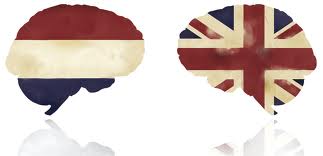
Every child aged five or over should be learning a foreign language, the education secretary Michael Gove has proposed.
He said:
“There is a slam-dunk case for extending foreign language teaching to children aged five.
“Just as some people have taken a perverse pride in not understanding mathematics, so we have taken a perverse pride in the fact that we do not speak foreign languages, and we just need to speak louder in English. It is literally the case that learning languages makes you smarter. The neural networks in the brain strengthen as a result of language learning.” (Source: The Guardian)
The proposal includes reform to teacher training and a review of the national curriculum to see if more subject-specialist teaching is required. Previous reports have shown the number of students taking GCSEs in modern languages has fallen as a result of it becoming non-compulsory. Language learning from the age of five seems like a step in the right direction.
Playwright Sir Tom Stoppard has presented to a committee of MSPs on the subject of languages.
In a petition, he told the committee that more needs to be done to protect lesser taught languages such as Polish, Russian and Czech. The teaching of these languages in Scottish institutions is currently under threat, with Glasgow University considering axing the teaching of five languages.
Sir Tom was born in Czechoslovakia and came to Britain as a refugee. He told the committee:
“For me the reputation for teaching language in general, and East European languages most particularly, gave Glasgow University, and by reflection the country, a distinction.
“It made it a place to be recommended everywhere.”
He warned: “It is on its way out, it will be gone.” (Source: BBC News)
Official letters will now be sent by the committee to Glasgow University and the Scottish government to ask what can be done about the decline.
Are you learning one of the “lesser taught” languages?
We’ve all made mistakes in our target languages, some of them embarrassing. The Johnson blog at The Economist asked readers to share their most depressing moments on the path to fluency – here are a few gems:
Hydriotaphia - I also have a Japanese story. Having just returned from a year of intense language study, my girlfriend, two other Japanese-proficient friends and I decided to order in Japanese at an Izakaya in NYC. Of course, having been served our oden (if I recall correctly), I tried to ask our waitress whether there was any spicy mustard (karashi) available. Unfortunately, I in fact asked her whether she had a boyfriend (kareshi). Neither my girlfriend nor the waitress were pleased with me.
Faedrus - One of the more famous mistakes English speakers make when learning to speak Spanish is to use the term “embarasada” – which means “pregnant” – when trying to say “embarrassed”. I had been speaking Spanish for about 15 years when I actually made that mistake at a dinner party, although I certainly knew better. I was – to say the least – embarrassed after I said it. But actually I just felt like an idiot.
My most embarrassing moment so far was in Spain, when I was buying something in a clothes store. The transaction went well until the assistant asked me in Spanish if I’d like a bag. I had no idea what she asked (although I suppose I could have guessed in the context) and my brain went completely blank – I couldn’t even say “sorry, I don’t speak Spanish”! The pressure really got to me as there was a queue behind me. Eventually the assistant guessed that I spoke no Spanish and waved a bag at me whilst repeating her question. As soon as I’d paid I escaped from the store very quickly!
Like Johnson’s writer and many of the commenters though, I find that native speakers often appreciate you making an effort in their language. Try not to take yourself too seriously, and laugh with the locals if you make a mistake!
A Japanese company claims to have invented the first robots that can chat with people.
Specifically designed for English language learners, the “chatbots” are accessed online. The online characters use high-speed speech recognition technology which allows them to interact in real time with students. Students can also participate in the chatbots’ virtual world.
Interestingly, the level of conversation can be adjusted depending on the student’s needs, and dialogue also appears on screen in English.
According to the Telegraph:
The “chatbots” are currently targeting Japanese students learning English however the company is planning to expand internationally.
The concept was inspired by the lack of opportunity for many Japanese students unable to afford costly lessons to practice speaking native English, according to SpeakGlobal.
“The percentage of Japanese who can actually speak English freely is in the low single digits,” added the company.
“This is due to the lack of opportunities to practice speaking with native English speakers. While many English conversation schools and online schools exist, some simply cannot afford this luxury.” (Source: Telegraph)
I’m not sure how I’d feel about interacting with a “chatbot”, but I suppose it is less scary than practicing your language skills with a live person – robots can’t judge you after all (yet!).
The Noun Project is a great idea with a simple mission: “sharing, celebrating and enhancing the world’s visual language”.
The project “collects, organizes and adds to the highly recognizable symbols that form the world’s visual language, so we may share them in a fun and meaningful way” with the aim of being able to communicate across cultures through visual imagery. All the symbols featured on their site are free, as the founders are excited by the idea of being able to communicate through simple representations as well as their artistic merits.
In August the project hosted an “Iconathon” to design symbols for concepts of food and nutrition. The idea behind it was to “facilitate better and easier communication between communities and the food organizations working to improve consumption of healthy, nutritious, locally grown foods”. Whilst not all the symbols are yet available on their website, the project does have symbols for both cake and cupcake already!
If you’re interested, take a look at their website, or follow @NounProject on Twitter.
I hope everyone is enjoying a great Bank Holiday weekend (we’ll ignore the weather). I found a blog post of 15 words with no English equivalent that I thought I’d share.
Here are my favourites from the list:
1. Zhaghzhagh (Persian)
The chattering of teeth from the cold or from rage.
4. Luftmensch (Yiddish)
The Yiddish have scores of words to describe social misfits. This one is for an impractical dreamer with no business sense. Literally, air person.
I always find it slightly disconcerting (but cool!) when I hear someone speak in a different language, when I’m used to hearing them speak English.
It’s especially odd when that person is a celebrity and you’d never have guessed they were fluent in a second language. So this feature from People magazine is really fun – videos of celebrities speaking in their second languages. Did you know Natalie Portman is fluent in Hebrew and French? I love the video of Joseph Gordon-Levitt as he to me he looks like a Frenchman!
What’s really interesting though is that most of the celebrities learned their second language through immersion programmes whilst at school. They seem to have retained the language learned through adulthood (Bradley Cooper for example). So perhaps a period of immersion is good for your language skills long-term?
The first programme, titled ‘The Mouth’ talks about the origins of speech and language. Stephen Fry asks “if you were an intelligent designer, would you combine the food processor and the word processor in the same unit?”
The programme also hears from
Ventriloquist Nina Conti explains how she has learned to over-rule the automatic functions of her mouth. A facial surgeon gives us the tour of the inside of the mouth and a psychologist discusses humanity’s earliest form of happy oral communication – or language. (Source: BBC)
The new series is on BBC Radio 4 on Monday’s and also available on iPlayer.
Now that I have (begrudgingly) returned from Croatia, time for an update on my language efforts.
Unfortunately this will be a short post, as it seems that the English language has invaded Croatia. Almost everyone that we talked to had a grasp of English, even if only some simple words or sentences. This is unsurprising as tourism is their primary industry, but a little disappointing as I was hoping to pick up more Croatian than I did. Another surprise was the number of people who speak German as a second or third language – although apparently the Germans have known about Croatia as a tourist destination for a lot longer than English-speakers.
What I did pick up was useful – dobar dan (good day) was particularly helpful as people would often greet us in the street. Hvala (pronounced ‘hwala’, thanks) was another good one, although often people would say ‘thank you’ to me anyway! Molim (please) was the other most frequently used word. I did pick up some pronunciation tips as well – hv seems to be said as “hw” and Brac (with an accent on the c) as ‘Bratch’. In this sense I didn’t find phrasebooks helpful as it is difficult to get a sense of how something is said just by reading it. It was only after listening to native speakers say words numerous times that I managed to imitate words.
Anyway, I can highly recommend a visit to Croatia – it’s incredibly beautiful and very easy to travel around!
According to a new study, Danish is more difficult for children to learn than languages such as Croatian, American English and Galician.
Dorthe Bleses, a linguist at the Center for Child Language at the University of Southern Denmark, found that because of the high number of vowels in spoken Danish, it is more difficult for children to pick up. Danish babies at 15 months old have on average a vocabulary of 84 words, compared to 150 for a Croatian child of the same age.
“The number of vowels has big significance for how difficult it is to learn a language. Many vowels makes a difficult language,” Bleses told Weekendavisen newspaper recently.
The official number of vowels in Danish is nine: a, e, i, o, u, æ, ø, å and y.
“‘Y’ isn’t a vowel,” you say? Well, in Danish it is. In Danish, even consonants are vowels.
But written Danish is not the issue. The problems start when Danes speak. In spoken speech, Danish actually has some 40 vowel sounds, says Bleses, depending upon where the vowels are placed in words and sentence strings.
To make matters worse, modern Danes ‘swallow’ lots of the remaining consonants that would create more audible definition, or annunciation, between words. Linguists call it ‘reduction’ or ‘ellision’. It is how ‘probably’ becomes ‘probly’ in American English. In Danish, it is how ‘spændende’ becomes ‘spen-nă’, and how a simple, little sentence like ‘Det er det’ becomes ‘dā-ă-dā’. (Source: Copenhagen Post)
But there is good news for Danish parents – the difference doesn’t persist and children ‘crack the code’ of the Danish language by the time they are nine or ten.